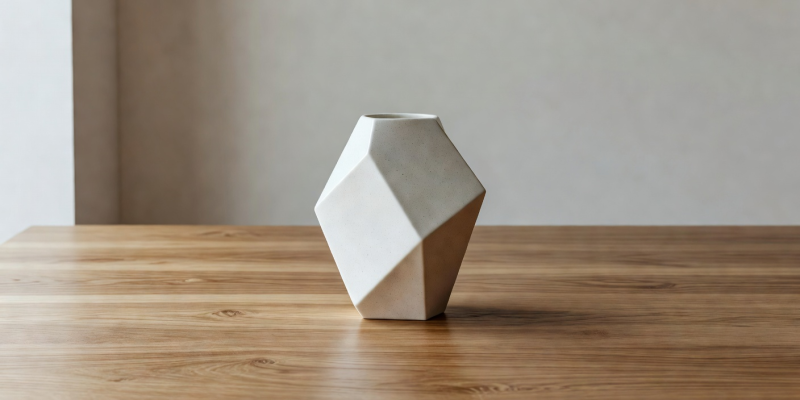
Minimalism in interior decoration is frequently misunderstood as living in empty, sterile boxes devoid of personality. In truth, successful minimalism is about intentionality. It is the philosophy of removing the unnecessary so that the necessary may speak. When it comes to decorative objects and ornaments, this means selecting fewer pieces of higher quality and giving them the space they require to be truly appreciated.
The Power of Negative Space
In art and design, "negative space" refers to the empty areas surrounding an object. In a decorated room, negative space is the blank wall next to a painting, or the empty expanse of a coffee table holding a single bowl. Rather than viewing empty space as something that needs to be filled, minimalist decoration treats empty space as a structural element of the room's design.
When you crowd a shelf with a dozen small trinkets, the eye becomes overwhelmed, and the individual beauty of each item is lost in the visual noise. By contrast, placing one beautifully crafted sculptural vase on that same shelf draws the eye immediately. The empty space around the vase frames it, amplifying its presence and importance within the room.
Selecting Statement Pieces
Because there are fewer items competing for attention, the items you do choose to display must carry more visual weight. Look for statement pieces that possess strong geometric forms, intriguing textures, or compelling historical narratives.
- Scale and Proportion: A common mistake in minimalist decor is using items that are too small. One large, oversized piece of art makes a stronger minimalist statement than a gallery wall of smaller frames.
- Material Authenticity: In the absence of loud colors or busy patterns, the intrinsic qualities of the materials step forward. Choose ornaments made from raw, authentic materials like unglazed ceramics, forged metals, carved wood, or natural stone.
- Functional Art: Minimalist decor heavily favors items that serve a dual purpose. A beautifully designed watering can, a stack of visually appealing coffee table books, or a sculptural fruit bowl can serve as primary ornaments while still providing utility.
Texture Over Color
To prevent a minimalist space from feeling flat or cold, decorators rely heavily on texture rather than color. A monochrome arrangement—for instance, a matte black bowl sitting on a polished black marble tray on a matte black wooden table—creates a rich, sophisticated look relying entirely on how light interacts with the different finishes.
When curating your ornaments, consider the tactile experience. Pair smooth, reflective surfaces (like glass or polished brass) with rough, matte surfaces (like terracotta or raw timber). This juxtaposition creates a quiet friction that keeps the eye engaged without resorting to visual clutter.
Ultimately, minimalist decoration requires discipline. It asks you to constantly edit your space, removing items that no longer serve a purpose or bring joy. The reward, however, is a tranquil, breathing home where every object has a designated place and a distinct voice.